David R. Sands covered numerous beats, including international trade, banking, politics and Capitol Hill, and spent eight years on the foreign desk as senior diplomatic correspondent. He has authored The Times' weekly chess column since 1993.
U.S. stock markets experienced one of the wildest trading day in years Monday, with the Dow Jones index losing nearly 1,100 points -- nearly 6 percent of its total value -- in the first few minutes after trading began, staging a spirited rally, but turning strongly negative again to finish off 588 points, or 3.58 percent.
The U.S. stock markets experienced their wildest trading day in years Monday, with the Dow Jones index losing nearly 1,100 points -- nearly 6 percent of its total value -- in the minutes after trading began, staged a spirited rally, but turned strongly negative again with an hour left in the session.
Amid growing anger on Capitol Hill and in Israel, the head of the U.N.'s nuclear watchdog on Thursday strongly defended the controversial methods that will be used to monitor possible cheating by Iran on the recently signed nuclear deal.
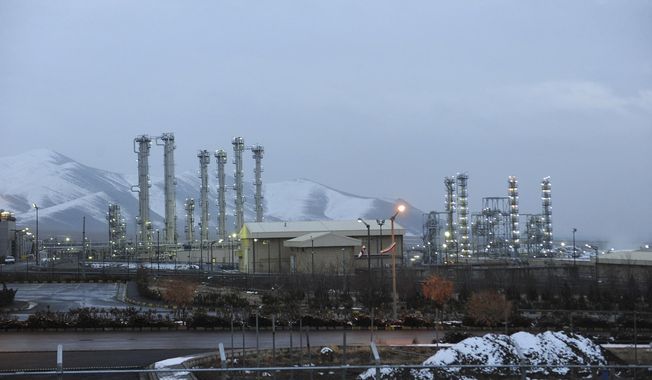
As Congress weighs a deal designed to curb Iran's nuclear programs, a top official in Tehran this week announced plans to construct a string of special schools to train a new generation of nuclear scientists and technologists.
In the latest move undercutting the longstanding ban on exporting U.S. crude oil, the Obama administration has approved a proposal that would trade American lighter sweet crude for heavier crude supplies from Mexico.
With the mercury rising and attention spans wilting, we take our traditional midsummer break from rigorous opening analysis or tedious endgame play to focus on some lighter August fare — a collection of miniatures taken from recent tournament play.
Reflecting in part a rising sentiment against all things foreign, a Russian lawmaker has proposed a bill that would require restaurant menus to devote at least half of their offerings to traditional Russian fare.
It was the signature opening of chess's 19th century Romantic Era, but has become a rare visitor to modern tournament chess. Paul Morphy used it for some of his greatest wins, Bobby Fischer claimed to have refuted it, and even today, some key lines remain a subject of intense theoretical dispute.
The future of American chess was on display as the country recently crowned its male and female junior champions, with rising Indian-American stars taking the honors in both events.
It was a highly appropriate Fourth of July weekend result. Just one U.S. player was among the eight grandmasters who tied for first in the 43rd World Open, held at the Hyatt Regency Crystal City from June 30 through July 5, but it was the American — New York GM Alex Lenderman — who took the official title and a small cash bonus by winning an "Armageddon" playoff match against Azerbaijani GM Rauf Mamedov.
The New York Stock Exchange had to shut down trading abruptly shortly before noon Wednesday over what officials said was a technical malfunction that froze computers on the market's fabled trading floor. U.S. officials said they saw no signs of a cyberattack, and the market was able to reopen for the last 50 minutes of the trading day.
Crystal City just had a golden moment as two of the best open tournaments on the American chess calendar took over the close-in Virginia suburb for the past two-plus weeks.
Suddenly and far too soon, America lost one of its colorful and most combative champions with the passing of six-time national champion GM Walter Browne last week at the age of 66.
The United States won't be there, but dozens of Washington's closest friends and allies will be on hand Monday as China celebrates a diplomatic and economic triumph with the signing of the formal charter for its proposed new Asian Infrastructure Investment Bank.
Walter Browne, a fearless attacker and indomitable competitor who dominated the American chess scene in the years after world champion Bobby Fischer retired from the game, died suddenly in his sleep Wednesday at the age of 66.
It's a game played on an unchanging battlefield of 64 squares with a fixed array of forces, so it would make sense that there's not much of a home-field advantage in chess.