Ben Wolfgang is a national security correspondent at The Washington Times, a senior member of its Threat Status team, and the host and producer of the award-winning Threat Status Podcast. Ben covers national security, foreign policy, military affairs, the defense industry and the rapidly evolving landscape of military technology. A Pennsylvania native, he joined The Washington Times in 2011 after serving as a political reporter at The Republican-Herald in Pottsville, Pa. Over the course of his career, Ben has covered the White House, Congress, and four presidential campaigns. His reporting has earned recognition from some of journalism's most respected organizations, including the Virginia Press Association and the Society of Professional Journalists' Washington, D.C. Chapter, among other honors. Ben has interviewed heads of state, chairmen of the Joint Chiefs of Staff, senior military commanders, cabinet secretaries, senior government officials, and the CEOs of many of the nation's largest and most influential defense companies. Ben is a frequent guest on broadcast media, with appearances on C-SPAN, the Sirius XM POTUS channel, and other outlets. He can be reached at bwolfgang@washingtontimes.com.
In response to pressure from Democrats and environmental groups, the Environmental Protection Agency's inspector general on Monday announced a probe into agency Administrator Scott Pruitt's taxpayer-funded travel to his home state of Oklahoma.
The Trump administration's plan to shrink at least three major national monuments is headed for a courtroom battle, with environmentalists and tribal groups warning over the weekend that they're readying lawsuits in hope of stopping the move.
Tribal leaders on Friday blasted Interior Secretary Ryan Zinke, saying his plan to shrink Utah's Bears Ears National Monument is "an insult" and shows blatant disregard for their concerns.
Interior Secretary Ryan Zinke on Thursday will call for changes to a "handful" of national monuments but will not recommend that any be fully rescinded.
The abundance and low cost of natural gas has been the main driver of coal-fired power plant closures across the country over the past decade, the Energy Department says, placing most of the blame for coal's free fall on energy economics, not Obama-era federal regulations.
President Bill Clinton's decision in 1996 to create the sprawling Grand Staircase-Escalante National Monument in Utah was so incredibly controversial that he couldn't even set foot in the state to make the announcement, instead holding a photo-op at the Grand Canyon in neighboring Arizona.
The next generation of U.S. nuclear power, which the Trump administration views as a key part of the nation's energy supply, is hanging on by a thread as two key projects have run into serious trouble and are raising doubts about the viability of new nuclear facilities moving forward.
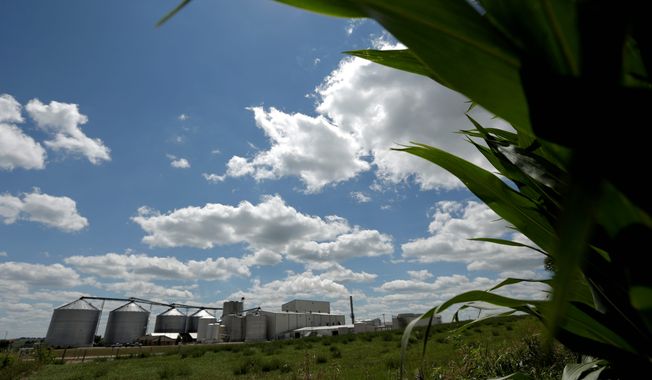
U.S. ethanol champions are bracing for the possibility that Brazil, the largest economy in Latin America, could soon land a devastating blow in what increasingly looks like an all-out global trade war over alternative fuels.
Amid a host of policy shifts from the Obama to Trump eras, one thing that has remained constant at the Interior Department is its massive online following, driven primarily by daily posts featuring wildlife, scenic landscapes and breathtaking views of the nation's national parks.
A day after violence broke out between counter-protesters and white nationalists in his city, Charlottesville Mayor Michael Signer on Sunday said President Trump deserves at least some of the blame.
A White House adviser on Sunday explicitly condemned white supremacists, going further than President Trump did Saturday on a violent attack on anti-racism counter-protesters in Charlottesville, Virginia.
As the dust settled after Saturday's deadly white nationalist rally in Charlottesville, President Trump was stung by a political backlash from both sides, with leading Republicans condemning what they saw as a tepid response and a failure to call evil by its name.
Environmental resistance inside the Trump administration hit new heights this week as a group of federal scientists leaked a draft of a sweeping climate change report to the press, pushing the study out into the bloodstream before their superiors had the chance to alter or approve it.
South Carolina this week filed a lawsuit against the Energy Department, seeking a whopping $100 million in reimbursements after the federal government failed to deliver on a promise to remove 1 ton of weapons-grade plutonium from the state.
Worried that President Trump and his Cabinet officials will suppress their findings, a group of federal scientists on Monday night leaked a draft of a sweeping climate change study to the media before it had been approved by the administration.
Interior Secretary Ryan Zinke on Monday announced the federal government will relax Obama-era rules designed to protect the imperiled sage grouse, saying the administration will offer states flexibility in how they choose to protect the bird and also will loosen restrictions on energy development in sage grouse habitat.
The White House's plan to revive a nuclear waste dump at Nevada's Yucca Mountain has pushed President Trump into an all-out war with Las Vegas, as powerful casino owners and city economic leaders vow to fight the administration tooth and nail over the proposal.