


SPONSORED What's This?
What 18,000 Women Posted Online That Their Doctors Never Heard
AI health chatbots keep launching. But the real crisis isn't technology — it's a medical system that forgot half its patients exist.
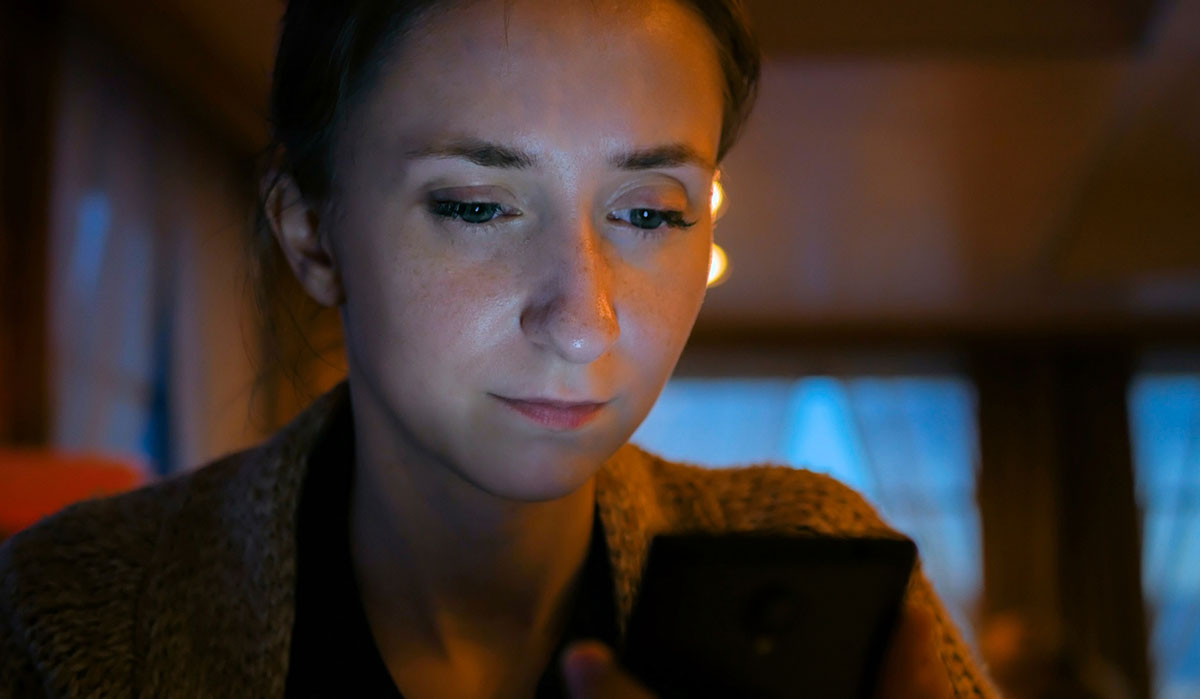
A 38-year-old project manager posted on Reddit at 2 a.m. last spring. She wasn't looking for a chatbot. She was looking for one person — just one — to tell her she wasn't going crazy.
"I can't sleep. I can't hold a thought at work past 10 a.m. My doctor told me it was anxiety, wrote a Lexapro prescription, and sent me home in under fifteen minutes. I'm not anxious. Something is wrong with my body and no one will tell me what."
Fourteen hundred women recognized themselves in that post. The top reply, from a woman who'd spent three years convinced she had early-onset dementia before a nurse practitioner finally ran a hormone panel: "This is perimenopause. Welcome to the club nobody wants to join."
That exchange isn't an outlier. It's a pattern. And it's enormous.
The conversation nobody in medicine was tracking
An independent analysis of more than 18,000 posts from women aged 30 to 50 across Reddit, TikTok, YouTube, and health forums turned up something the medical establishment hadn't bothered to look for. Not survey data. Not self-reported questionnaires where people check boxes they think researchers want checked. Raw, unfiltered, 2 a.m. posts from women who'd exhausted every other option.
The scale alone should concern people. But it's what the data revealed that matters.
Anxiety was the most discussed problem — nearly 7 million engagements across platforms. Not generalized anxiety disorder as it's taught in medical schools. The sudden-onset kind. The kind where a 42-year-old litigation attorney pulls into a gas station because her heart is hammering and she genuinely does not know why.
Then insomnia. Then brain fog — the inability to retrieve words, hold a meeting agenda in memory, or finish a paragraph. Then fatigue so crushing that women described lying on bathroom floors during lunch breaks. Hair clogging the shower drain. Fifteen pounds out of nowhere. And rage. Real, disproportionate, volcanic rage at partners and children over things that didn't warrant it.
All of it textbook perimenopause.
Almost none of it diagnosed.
The numbers that should embarrass American medicine
A Yale School of Medicine study found that 94 percent of American women never received any form of menopause education from a healthcare provider. Not a pamphlet. Not even a two-minute heads-up during a yearly checkup. Zero.
And here's the part that turns frustration into something closer to outrage: it's not just the patients who don't know. Eighty percent of OB/GYN residency programs in the United States provide no formal menopause training, according to a study published in the journal Menopause. The physicians aren't withholding information. They were never taught it.
The University of Virginia landed what might be the most uncomfortable finding of all. Their research showed that 55.4 percent of women between 30 and 35 already experience moderate-to-severe perimenopause symptoms. Thirty. Not fifty. Not forty-five. Thirty.
That's a full decade — sometimes fifteen years — before most doctors even consider hormonal shifts as a diagnosis. The math doesn't work. And women are paying for it — with antidepressants they didn't need, thyroid panels that came back normal, and that particular look from a doctor that says maybe it's stress without quite meeting their eyes.
Why the chatbot gold rush won't fix this
The tech industry spotted the gap. Of course it did.
OpenAI launched ChatGPT Health in January. Google keeps pushing health features into its AI. At every digital health conference from San Francisco to Boston, startups are pitching AI-powered diagnostics to investors who smell a market nobody's serving.
And women — rightly — aren't buying it.
A Georgetown University and Boston University study found that women adopt AI tools at a 25 percent lower rate than men. Not because they're technophobic. Because, as this newspaper has reported, they're practical enough to ask what the thing actually knows before trusting it with their health.
The Oxford study tells the rest of the story. Researchers tracked 1,300 participants and found that people using AI chatbots to research health conditions made no better decisions than those who simply searched online. The chatbots were right 95 percent of the time on written medical scenarios — the structured, textbook kind. They fell apart with real humans asking messy, real-life questions.
The problem isn't the algorithm. It's the premise.
Generic AI doesn't have a framework for the specific hormonal, metabolic, and neurological chain reaction that defines perimenopause. Ask a general-purpose chatbot about sudden brain fog at 37 and you'll get a tidy list that starts with "improve sleep hygiene" and ends with "consult your physician." The same physician who — statistically speaking — was never trained in the thing you're actually experiencing.
Women aren't looking for a smarter chatbot. They're looking for someone — or something — that has actually done the reading.
What happens when you start with the women instead of the model
A few teams decided to start from the other end of the problem. Instead of building an AI and hoping it would figure out women's health, they started with the women.
Wellls, a lifestyle medicine platform, read every one of those 18,000+ posts. Not to train a chatbot — to understand what women are actually going through. The team mapped over 500 distinct health problems women report, then cross-referenced each against nearly 16,000 peer-reviewed sources, including more than 10,000 PubMed articles. That's not a language model guessing. That's due diligence.
What that woman posting at 2 a.m. finds looks nothing like ChatGPT. A two-minute assessment that names what is actually happening to her — not "improve sleep hygiene" but a specific hormonal mechanism and a plan built around it. Courses grounded in 90+ clinical citations each. Three hundred thirty-six exercise programs matched to her symptoms — not "try yoga" but protocols tied to published outcomes for anxiety rooted in hormonal shifts. And an AI wellness companion that remembers her between sessions — tracks how she feels after every lesson, notices when things are getting worse, and reaches out before she has to ask.
But what might matter most is the idea underneath all of it. Most health platforms treat perimenopause as a problem to manage — a body winding down. Wellls treats it as a metamorphosis. The exhaustion, the brain fog, the body that suddenly feels foreign — not symptoms of decline. The cocoon phase. And the entire system — the tracking, the companion, the courses, the exercises — exists to get women through to the other side.
The real question
Roughly 50 million American women are in perimenopause right now. The majority don't know it. Their doctors won't bring it up. And the AI industry — with all its capital and all its talent — would rather sell them a single conversation with a language model than fund the slow, unglamorous work of following a woman's case over months — tracking what's getting better, what's getting worse, and adjusting when the data says to.
That woman is still awake at 2 a.m. She is still posting. She is not broken. She is becoming — though nobody has told her that yet.
Whether anyone builds something that stays with her past the first conversation — or whether female health stays what it's been since the 1980s, an afterthought dressed up in a pastel app — that's not a technology question. That's a question about who we decide matters.
