


SPONSORED What's This?
Building Syria Back from the Inside Out
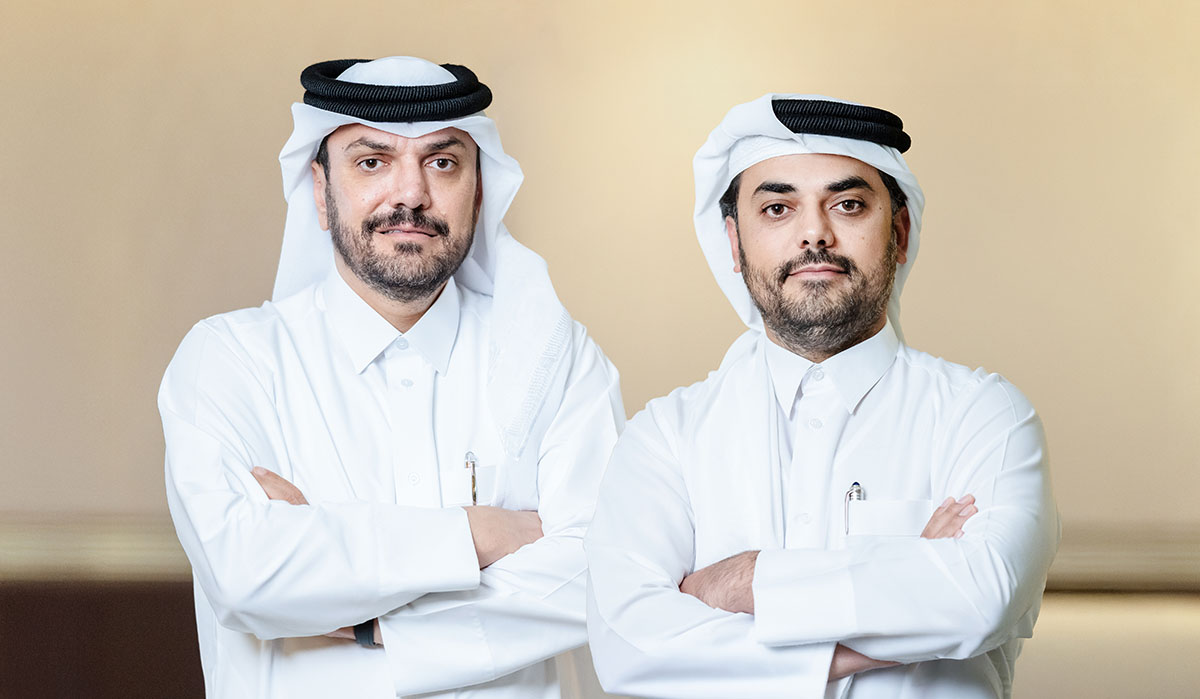
As a Chevron partnership puts Syria's offshore potential on the map, one of the Arab world's largest family-owned groups says the real test of investment is what it leaves behind for people on the ground.
When Power International Holding (PIH), the Qatari group, joined Chevron and the Syrian Petroleum Company to launch what it describes as Syria's first offshore exploration initiative, the announcement carried a message well beyond the energy sector. For PIH Chairman Moutaz Al-Khayyat and President and Group CEO Ramez Al-Khayyat, it is the clearest sign yet of where the country is heading.
"This agreement means a lot to us, and not just because of the energy opportunity," Moutaz says. "The fact that we are now partnering with Chevron and the Syrian Petroleum Company to launch the country's first offshore exploration initiative sends a clear signal to the world: Syria is open, it is rebuilding, and it is ready to compete."
For the Al-Khayyat brothers, the logic is direct. "Confidence attracts capital, and capital enables reconstruction at scale." Private enterprise, done right, is in his view one of the most powerful forces for development, and PIH sees its own role as a bridge between communities, governments, private industry and international capital.
A group built to control its own supply chain
PIH is an integrated, multi-sector group with interests spanning energy, mining, concessions, construction, infrastructure, healthcare, food security, agriculture, real estate, hospitality and telecommunications. It counts more than 400 companies, 65,000 employees representing 111 nationalities, and operations in 26 countries.
Scale, Ramez Al-Khayyat argues, is not what defines the group. Structure is. Early in its history, PIH concluded that a contractor dependent on fragmented supply chains will always be vulnerable, and set out to build its own industrial and supply-chain capabilities so that it controls quality, cost and delivery at every stage. The group calls this backward integration, and later applied the same logic to food security, hospitality, healthcare and energy.
"The result is not a collection of separate businesses. It is a connected ecosystem where each sector strengthens the others."
Geographic expansion followed the same discipline: enter early, build a strong position, then grow, from the Maldives to Oman, Saudi Arabia and Algeria. When the FIFA World Cup ended and others reduced their workforces, PIH kept its teams and redeployed their expertise into new markets. "People first. That has always been the principle."
The group says its record has been recognized externally. PIH ranks seventh on Forbes Middle East's Top 100 Arab Family Businesses, while UCC Holding ranks 41st among ENR's Top 250 International Contractors. "We got there through disciplined delivery, earned trust, and a willingness to take on work others considered too complex."
Qatari expertise and international partnerships for reconstruction
PIH's projects in Syria span power generation, solar energy, pipeline infrastructure and airport redevelopment, all designed to restart economic activity and restore basic services for ordinary people. Through the Al Khayyat Foundation, the group has also dedicated USD 25 million to healthcare and education in the country, on the principle that rebuilding is as much about the next generation as it is about physical infrastructure.
"We are proud of our Qatari identity, and Qatar is the base from which we conduct our business and build our international partnerships," says Moutaz Al-Khayyat. "We also take pride in our Syrian family roots, which add a personal dimension to our contribution to reconstruction.
"Our vision for Syria is consistent with the approach we take in the countries where we operate: investing in essential sectors, building long-term partnerships, creating jobs and delivering a lasting impact on people's lives. We see an opportunity to draw on the expertise and capabilities we have built in Qatar and internationally to help restore services and revitalize the Syrian economy, working with partners who share this vision."
PIH is looking for long-term partners who see Syria as a country with exceptional talent, resilience and opportunity, and a chance to help shape a new chapter in its history.
An open door for American capital
PIH sees American companies as a natural part of what comes next. "We're genuinely excited about the opportunity to work alongside American partners as Syria rebuilds," Ramez says. "There is enormous potential ahead, and we believe American businesses, investors, and entrepreneurs can play an important role in helping unlock it."
They are realistic about the timeline. "We know rebuilding Syria will take time, commitment, and trust. But we're optimistic about what can be achieved when local knowledge and international expertise come together." That pairing, local knowledge alongside international expertise, is the model PIH says it wants to offer partners entering the market.
Value beyond the balance sheet
Running through all of it is a single conviction. "We believe investment has to do more than generate a financial return. It must create real, lasting value for people, communities, and countries."
The markets that draw PIH most, Moutaz says, are often those where the need is greatest, and the sectors it targets are the foundations of everyday life: energy, infrastructure and essential services. "They are the things that keep the lights on, connect people to opportunity, and give communities a platform to move forward."
The group says it has applied the same approach in Qatar and across 25 countries. "We do not just build projects; we try to build ecosystems around them. Jobs, infrastructure, opportunity." Syria, it says, will get the same treatment.
For the Al-Khayyat brothers, this is not branding but method. "That is not just a mission statement for us. It is how we make decisions. When we enter a market, we are thinking about infrastructure, healthcare, education, jobs, not just the bottom line. We want to help the places we work in actually build back and rise."
