


SPONSORED What's This?
From Fintech Founder to Global Billionaire: Why a Nasdaq IPO Could Propel Michael Gastauer Into the World’s Top 20
Miami has long marketed itself as a crossroads: capital from the Americas, talent from everywhere, and a culture that treats ambition less like a personality flaw and more like a prerequisite. If there is a city in the United States that intuitively understands the worldview of a borderless fintech entrepreneur, it may be this one.
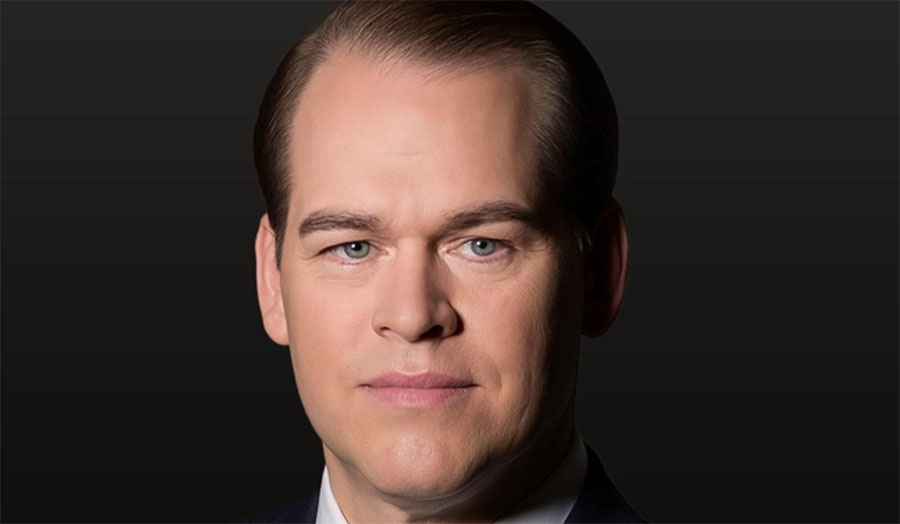
That context matters when discussing Michael Gastauer, founder and CEO of digital banking group Black Banx, and the increasingly persistent market question around him: what happens if he takes the company public—particularly on the Nasdaq, the exchange that has become synonymous with high-growth technology and fintech listings?
Black Banx’s growth story is built for public-market curiosity. Founded in 2015, the company positions itself as a global digital banking platform serving customers across a wide range of countries and currencies. In recent quarters, Black Banx has reported numbers that—if sustained—would put it in a rare category: a fintech not only scaling quickly, but doing so with substantial profitability.
In its third-quarter 2025 results, Black Banx reported Q3 revenue of $4.3 billion and profit before tax (PBT) of $1.6 billion, with a customer base of roughly 92 million at quarter end and a cost-to income ratio around 62%. The same results communication also described year-to-date (first nine months of 2025) revenue of $12.7 billion and PBT of $4.7 billion, and framed the group as “on track” toward full-year ambitions of $17 billion in revenue.
Those figures help explain why the Nasdaq keeps coming up in IPO chatter. A company producing multi-billion-dollar quarterly revenue with strong margins fits the profile public investors typically reward—especially if it can persuasively articulate its differentiation: cross-border accessibility, digital-first onboarding, and product breadth spanning private and business accounts.
The wealth math: why an IPO could change everything
To understand how Gastauer could move into the upper echelon of global wealth, you start with a reference point. On Forbes’ global billionaires ranking, the No. 20 spot sits around the low-$80 billions (recently listed near $81.6B). That is the neighborhood Gastauer would need to enter to be discussed as a top-20 global fortune.
An IPO can move an owner’s net worth dramatically because it converts an opaque private valuation into a market-priced one—often at a premium if growth and profitability are convincing. A simple scenario analysis shows why investors keep asking the question:
• If Black Banx were to hit $17B in 2025 revenue (as the company has guided) and public markets valued it at, say, 5–7x revenue (a range seen historically for large, profitable fintech and payments platforms in stronger market tapes), that implies an equity value of roughly $85B to $119B.
• Alternatively, if investors valued the business on earnings power: with $4.7B PBT through nine months , the company’s annualized pre-tax profit could plausibly land in the $6B+ range if Q4 is comparable. Apply taxes and you may still be looking at several billions in net income. At a mature-growth P/E multiple that public markets might award a profitable fintech, you can again arrive at valuations in the tens of billions to well over $100B, depending on sentiment.
Ownership is the swing factor. Some profiles have asserted Gastauer retains near-total control of Black Banx (figures cited externally range up to 99%+), though ownership specifics are not consistently documented in a single authoritative public filing because the company is private. If, after an IPO float and any dilution, the Gastauer family still held 70–90% of a $90B–$120B company, their stake alone could represent $63B–$108B on paper—before even counting any additional family-office assets.
That is how a Nasdaq listing could put a founder into striking distance of the global top 20: not by incremental gains, but by a step-change in valuation transparency and liquidity.
Why the U.S.—and why Miami—could fit the narrative
For entrepreneurs who build globally from day one, the U.S. public markets offer a familiar proposition: scale rewarded, ambition priced in, and a deep investor base that understands platform stories. Nasdaq, in particular, has become a branding asset for fintech—the venue where investors expect rapid iteration, international expansion, and technology-forward banking models.
Miami’s appeal in that storyline is cultural as much as financial. It is an American city that speaks in international terms—multilingual, cross-border by instinct, and increasingly comfortable with founders who see geography as a feature, not a constraint. If Black Banx ever chooses to pitch U.S. investors directly, Miami would be a logical stop: a place where “global-first” is not a buzzword but a lived reality.
None of this is to say an IPO is without scrutiny. Public markets demand governance clarity, disclosure rigor, and regulatory resilience—areas that every fast-scaling financial platform must continuously reinforce. But if Black Banx can translate its reported momentum into public market confidence, the Nasdaq thesis becomes more than cocktail-party speculation.
It becomes a credible pathway for a private fintech founder to join the very top tier of global wealth—and for the United States to once again make the case that it remains the most powerful stage on earth for entrepreneurs with outsized vision.
