


SPONSORED What's This?
The Rise of Portable Offices: How Modular Workspaces Are Reshaping Construction Sites
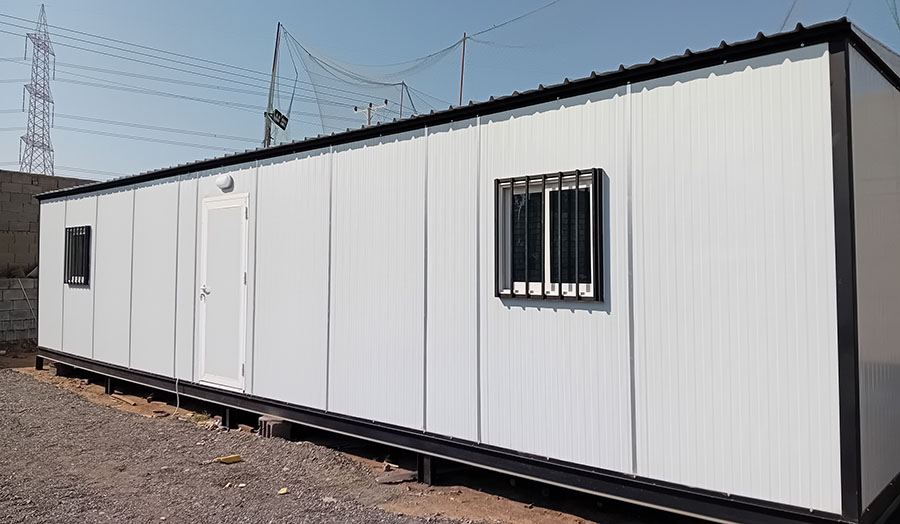
The emerging revolution in construction is largely defined by popular demand for portable offices and modular buildings. It is certainly much more on the extensive use of technology in directing the operation of construction sites—providing answers for the labor shortages, inefficiencies in cost, and demands of green building techniques. No fad, the shift towards construction trailers and modular construction is a paradigm shift in how companies operate sites and workflow.
Mitigating Labor Shortages with Modular Solutions.
At present, the construction industry is facing an unprecedented crisis in manpower. The unavailability of skilled workers has delayed projects further and spiralled their costs. According to reports by the Associated General Contractors of America (AGC), 89 per cent of the construction firms in the USA faced the tough task of acquiring competent workers in 2023. This shortage of labor has, par e qui, opened the path through which firms have undergone some changes to their strategies, even giving modular construction some thought as an alternative to jamming in heavy downsides.
Modular workspaces and portable offices will bail out this company. Prebuilding most elements of a job off-site does involve less on-site labor, shorter overall project times, and higher overall efficiency.
Economic and Environmental Advantages of Portable Offices.
In addition to the convenience of gaining labor hours, portable offices also provide quite tangible contributions to the economy and environment. Conventional use of materials for on-site office configurations means transportation and labor hours are also heavily used. Modular offices, on the other hand, are built off-site and under controlled conditions, minimizing waste and maximizing efficiency.
A 2023 report by the Modular Building Institute discovered that modular construction projects take 20-50% less time to complete compared to traditional construction. In addition, a study done by the Waste & Resources Action Program (WRAP), modular techniques can reduce waste generated by materials such as timber, cardboard, plastics, and concrete by as much as 90%.
Sustainability at the Core.
Modular offices are fast becoming the solution of choice among industries for sustainability as governments are pressing for green initiatives in organizations. Reusing and resituating construction trailers greatly reduces teardown waste and the carbon emissions of new construction. Increasingly, modular buildings integrate energy-efficient building materials and advanced technology to meet green building codes and regulations.
Flexibility and Adaptability: Essential Drivers of Modular Workspace Adoption.
Construction sites these days need flexibility. The fixed, brick-and-mortar site office, commonly inflexible and costly to amend, is slowly becoming a thing of the past. Portable offices and modular buildings provide the level of flexibility modern projects need.
- Rapid Deployment: Modular buildings are installed and equipped within days, as opposed to weeks or even months for traditional buildings.
- Versatile Layouts: Companies can configure their office buildings to include conference rooms, break rooms, and even sophisticated command centers.
- Modular Units: Once a project is completed, construction trailers can be dismantled and reused on other sites, reducing the capital investment in new infrastructure.
This flexibility is particularly helpful for businesses that have multiple projects simultaneously, as it allows them to maintain a similar operational procedure at different locations.
Role of Technology in Improving Portable Workspaces.
Along with this rapid technological advancement comes the establishment of flexible office environments. Smart building technology is imbibed in modular workplaces, thus making them much more functional and efficient.
Very Popular Tech Trends in Modular Workspaces.
- IoT Monitoring: Sensors are used to monitor energy consumption, temperature, and indoor air quality, thus adapting the parameters of the workplace.
- Solar-Powered Works: Solar panels affixed onto the construction platform are being trialled to reduce dependence on grid power.
- Robotics & Automation: Automated architecture (AUAR) employs robots to fabricate modular housing units in such a way that this entire methodology will soon become transferrable into portable offices.
- Smart Security: Remote monitoring and biometric access control implement site office security.
These innovations in combination make modular offices a complete choice for companies that conserve space and are technologically";
Real-Life Applications: How Construction Firms Are Embracing Modular Offices.
Portable offices already enjoy popularity in many construction companies as part of their project proposals. Nadler Modular has been at the forefront of this, creating scalable and highly customizable office solutions for different markets.
Case Study: Mega Infrastructure Project in California.
Of late, a large construction company in California hinged on the use of construction trailers to organize activities across a multi-billion-dollar infrastructure project. Due to the enormous overwhelming project and the isolation of the firm, it had logistical challenges. Through the utilization of modular offices, they managed to:
- Develop centralized command centres for project managers and engineers.
- Provide break rooms and rest areas for staff.
- Set up satellites that can be relocated throughout the life of the project.
This greatly minimized downtime, maximized inter-team cooperation, and, consequently, increased the productivity of all projects.
Beyond the Building Site: The Rise of Portable Classrooms.
The idea of modular workplaces is going beyond just the building site. Increasing numbers of students compel schools and universities to use space-deficit remedy solutions in the form of portable classrooms. Such facilities are instant and cost-effective in the context of urban areas characterized by significant spikes in enrollment.
More than 20% of schools in the U.S. employ portable classrooms to address capacity, as indicated by the National Center for Education Statistics (NCES). Portable classrooms provide the same advantages witnessed in construction trailers—quick setup, mobility, and flexibility—and are a plausible substitute for educational institutions.
Challenges and Issues in Modular Workspace Installation.
Even though there are hundreds of benefits which come with modular offices and mobile offices for business, there are still a few drawbacks to contend with:
- High Upfront Cost: Although they are cost-effective in the long term, the upfront costs of modular are extremely high.
- Approval Procedure: To be permitted, various codes of building relevant to the local environment must be satisfied.
- Durability Problem: Low-quality units can be exposed to severe weather.
- Perception Problem: Construction trailers are still perceived by some stakeholders as temporary and second-best compared to permanent structures.
However, the pressure towards advanced modular technologies—and evolving regulatory regimes—actually addresses these problems, thus allowing portable offices to emerge as an increasingly mainstream solution.
The Future of Construction with Modular Workspaces.
The future appears bright in adopting modular workplaces in construction. The trend is driven by several factors:
- Urbanization: Dynamic solutions such as mobile offices will be needed to match the demands of cities with very fast infrastructure.
- Technological Progress: The constant innovation in smart building technologies will retain and further augment the functionality of modular workspaces.
- Climate Initiatives: Construction trailers will grow in popularity as the new office space alternative for companies willing to shrink their carbon footprints.
- Economic Conditions: A prevalent shortage of laborers combined with rising material costs could push companies toward modular solutions available for cutting costs.
Conclusion: Seizing the Modular Revolution.
A reorganization in the management of the site is modular workplaces and mobile office units. Solving the problem of labor shortages and cost inefficiency brings sustainable and technologically integrated practices to the industry. The day is approaching when construction trailers and portable classrooms will be the norm on job sites and schools alike. Nadler Modular and other players in the field are leading this paradigm shift in the construction sector.
With more companies seeing the value of modular building, the only question now is: How soon will the industry catch up to this revolutionary trend? Let us hear your views in the comments section!
