Ben Wolfgang is a national security correspondent at The Washington Times, a senior member of its Threat Status team, and the host and producer of the award-winning Threat Status Podcast. Ben covers national security, foreign policy, military affairs, the defense industry and the rapidly evolving landscape of military technology. A Pennsylvania native, he joined The Washington Times in 2011 after serving as a political reporter at The Republican-Herald in Pottsville, Pa. Over the course of his career, Ben has covered the White House, Congress, and four presidential campaigns. His reporting has earned recognition from some of journalism's most respected organizations, including the Virginia Press Association and the Society of Professional Journalists' Washington, D.C. Chapter, among other honors. Ben has interviewed heads of state, chairmen of the Joint Chiefs of Staff, senior military commanders, cabinet secretaries, senior government officials, and the CEOs of many of the nation's largest and most influential defense companies. Ben is a frequent guest on broadcast media, with appearances on C-SPAN, the Sirius XM POTUS channel, and other outlets. He can be reached at bwolfgang@washingtontimes.com.
Environmental activists have gone from being the government's closest allies to being nonstop litigants in just four months, filing lawsuits on a weekly basis challenging virtually every move the Trump administration has made in its deregulatory push.
The Environmental Protection Agency on Friday announced a legal settlement that could allow a highly controversial Alaska mine project to move forward.
Former President Obama is widely revered by activists and progressive Democrats for his actions on climate change, but Environmental Protection Agency Administrator Scott Pruitt on Thursday challenged those credentials and said the former commander in chief was no "environmental savior."
Sen. John McCain on Wednesday handed Republican leadership and President Trump a stinging legislative defeat as he cast a surprise deciding vote to maintain an Obama-era regulation limiting methane emissions from oil and gas wells.
An area larger than Yellowstone National Park could be opened up for fossil fuel development as a result of the Trump administration's ongoing review of national monuments, according to a study from environmentalists who deeply oppose such energy exploration.
Based on the beautiful pictures and effusive praise he has posted to Twitter this week from one of the nation's newest national monuments, you might never guess that Interior Secretary Ryan Zinke could set into motion the process to erase it from the map.
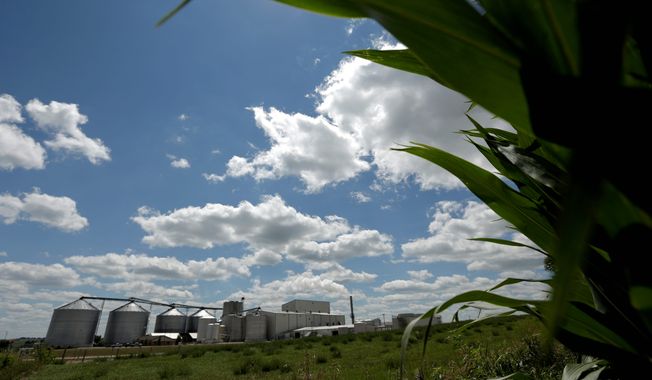
Faced with an uncertain future in the U.S., ethanol proponents have mounted a public push north of the border, urging Canada to raise its own renewable-fuel levels for gasoline.
Environmental Protection Agency Administrator Scott Pruitt came under fire Monday after he began cleaning house at a key scientific review board, with critics charging the agency once again is prioritizing politics over science.
Interior Secretary Ryan Zinke on Sunday launched a "listening tour" across Utah designed to quell an uproar over his department's controversial review of national monuments.
Following through on an executive order signed by President Trump last week, the Interior Department on Friday released a list of the 21 national monuments and five marine monuments now under federal review.
A coalition of the nation's most powerful environmental groups filed a lawsuit Wednesday to stop President Trump's plan to open up new areas of the Atlantic, Pacific and Arctic oceans to offshore drilling.
With President Trump's decision just days away, the Paris climate accord appears to be in jeopardy as officials inside the White House and powerful conservatives outside government capture momentum by seizing on thorny legal questions that would arise from keeping the deal while the administration simultaneously guts the regulations needed to help the U.S. meet its promise.
A prominent oil and gas industry group said Monday the U.S. has dramatically reduced greenhouse-gas emissions without burdensome regulations and international deals, urging President Trump to withdraw from the landmark Paris climate agreement and allow market forces to drive energy policy.
Congress this week will vote on legislation to offer permanent health care benefits to more than 22,000 retired coal miners, ending a lengthy standoff on Capitol Hill that had left the retirees unsure about their future coverage.
In a major victory for the White House, the D.C. Court of Appeals on Friday suspended a case on the Obama-era Clean Power Plan, paving the way for the administration to dismantle the rule without interference from the courts.
Reversing yet another of his predecessor's actions on energy and the environment, President Trump on Friday signed an executive order that paves the way for a massive increase in offshore oil-and-gas drilling.
President Trump on Friday will begin to reverse his predecessor's limits on new offshore drilling, potentially opening up vast new areas in the Outer Continental Shelf for oil-and-gas exploration.
Leading green activists say President Trump has already done a full term's worth of damage, rolling back Obama-era regulations and installing one of their chief critics as head of the Environmental Protection Agency.
A group of Republican lawmakers on Thursday urged President Trump to keep the U.S. in the landmark Paris climate agreement but to rework America's commitment so that it "does no harm to the economy."