Skip to content
Advertisement
Author profile
Ben Wolfgang

Ben Wolfgang

bwolfgang@washingtontimes.com

Ben Wolfgang is a national security correspondent at The Washington Times, a senior member of its Threat Status team, and the host and producer of the award-winning Threat Status Podcast. Ben covers national security, foreign policy, military affairs, the defense industry and the rapidly evolving landscape of military technology.
A Pennsylvania native, he joined The Washington Times in 2011 after serving as a political reporter at The Republican-Herald in Pottsville, Pa. Over the course of his career, Ben has covered the White House, Congress, and four presidential campaigns.
His reporting has earned recognition from some of journalism's most respected organizations, including the Virginia Press Association and the Society of Professional Journalists' Washington, D.C. Chapter, among other honors.
Ben has interviewed heads of state, chairmen of the Joint Chiefs of Staff, senior military commanders, cabinet secretaries, senior government officials, and the CEOs of many of the nation's largest and most influential defense companies.
Ben is a frequent guest on broadcast media, with appearances on C-SPAN, the Sirius XM POTUS channel, and other outlets.
He can be reached at bwolfgang@washingtontimes.com.

Articles by Ben Wolfgang

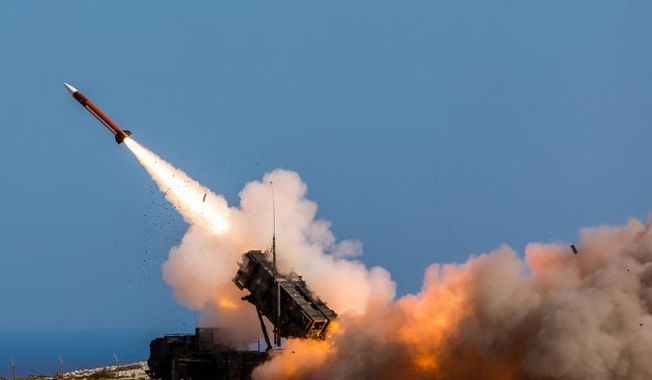
In this image released by the U.S. Department of Defense, German soldiers assigned to Surface Air and Missile Defense Wing 1, fire the Patriot weapons system at the NATO Missile Firing Installation, in Chania, Greece, on Nov. 8, 2017. Patriot missile systems have long been a hot ticket item for the U.S. and allies in contested areas of the world as a coveted shield against incoming missiles. In Europe, the Middle East and the Pacific, they guard against potential strikes from Iran, Somalia and North Korea. So it was a critical turning point when news broke this week that the U.S. has agreed to send a Patriot missile battery to Ukraine. (Sebastian Apel/U.S. Department of Defense, via AP, File)

Threat Status: No end in sight

Washington is still abuzz about the pre-Christmas visit last week by Ukrainian President Volodymyr Zelenskyy, who traveled outside his country for the first time since Russia's February invasion and met with President Biden at the White House.

December 28, 2022
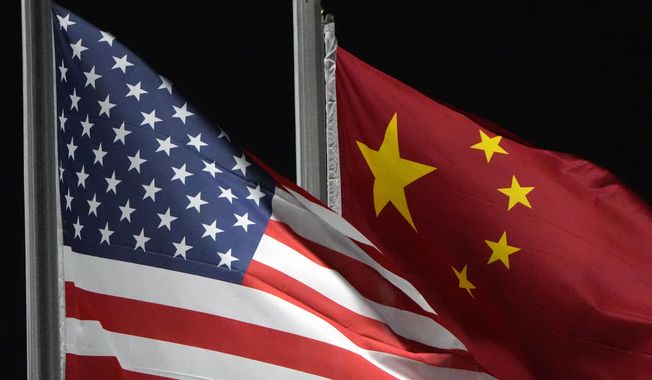
The American and Chinese flags wave at Genting Snow Park ahead of the 2022 Winter Olympics, Feb. 2, 2022, in Zhangjiakou, China. The Commerce Department is tightening export controls to limit China’s ability to get advanced computing chips, develop and maintain supercomputers, and make advanced semiconductors. (AP Photo/Kiichiro Sato, File)

U.S. ‘waking up too slowly’ on China, House GOP point man on Beijing warns

The U.S. is "waking up, but we're waking up too slowly" to the growing threats posed by China, Rep. Mike Gallagher said this week, arguing that the Biden administration is failing to take the steps necessary to put America in a position to win its 21st-century showdown with the rising communist military and economic superpower..

December 20, 2022
Ukrainian soldiers fire French MO-120-RT-61 120 mm rifled towed mortar at Russian positions in the frontline near Bakhmut, Donetsk region, Ukraine, Tuesday, Dec. 6, 2022. (AP Photo/LIBKOS)

U.S. isn’t helping Ukraine hit targets inside Russia, officials say

The U.S. is not actively aiding or encouraging Ukraine to hit targets inside Russia, Biden administration officials said late Tuesday as Washington distanced itself from a series of apparent drone strikes on key Russian military targets over the past several days.

December 7, 2022