Ben Wolfgang is a national security correspondent at The Washington Times, a senior member of its Threat Status team, and the host and producer of the award-winning Threat Status Podcast. Ben covers national security, foreign policy, military affairs, the defense industry and the rapidly evolving landscape of military technology. A Pennsylvania native, he joined The Washington Times in 2011 after serving as a political reporter at The Republican-Herald in Pottsville, Pa. Over the course of his career, Ben has covered the White House, Congress, and four presidential campaigns. His reporting has earned recognition from some of journalism's most respected organizations, including the Virginia Press Association and the Society of Professional Journalists' Washington, D.C. Chapter, among other honors. Ben has interviewed heads of state, chairmen of the Joint Chiefs of Staff, senior military commanders, cabinet secretaries, senior government officials, and the CEOs of many of the nation's largest and most influential defense companies. Ben is a frequent guest on broadcast media, with appearances on C-SPAN, the Sirius XM POTUS channel, and other outlets. He can be reached at bwolfgang@washingtontimes.com.
Congressional Democrats have included a Republican-backed measure to repeal President Biden's COVID-19 vaccine mandate for service members in the annual Pentagon policy bill, dealing a severe blow to the White House.
U.S. Navy ships employed "non-lethal lasers" to ward off an Iranian vessel that passed within 150 yards of the American craft in the Strait of Hormuz on Monday night, military officials said.
Sen. James Lankford said Tuesday he plans to block all confirmation votes on Defense Department nominees until the Pentagon explains why it has granted so few religious waivers for troops seeking to avoid the COVID-19 vaccine.
Nearly four months ago, the Biden administration drove past an off-ramp that offered a chance to rethink and possibly scrap its COVID-19 vaccine mandate for U.S. troops.
The war in Ukraine is entering its darkest hour, with Kyiv and its Western allies racing to repair energy and water infrastructure destroyed by Russian missiles and to deliver basic cold-weather supplies such as heaters and blankets to a population bracing for a brutal, trying winter.
The Kremlin on Tuesday confirmed it has called off scheduled nuclear arms talks with the U.S. in what analysts call a dangerous, "irresponsible" move, one that marks the latest example of how the fallout from Russia's war in Ukraine has spilled over into other arenas with potentially far-reaching repercussions.
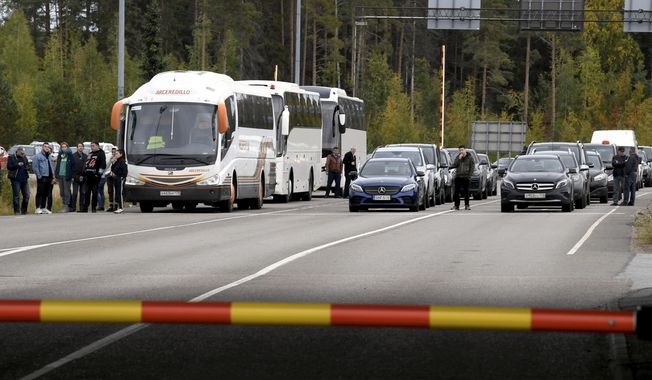
It's shaping up to be far less imposing than the Berlin Wall and not nearly as politically divisive as President Trump's coveted barrier between the U.S. and Mexico, but Finland's planned border fence with Russia looks to be a major geopolitical statement.
Morale and motivation have been deciding factors in battles throughout human history -- and they could ultimately spell doom for Russia's war in Ukraine.
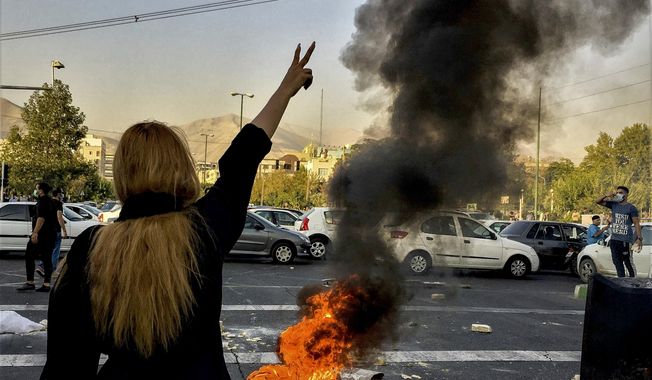
Iran and its soccer team are in the international spotlight ahead of World Cup soccer games this month against Western rivals England, Wales and the U.S., with Tehran's brutal crackdown on domestic protests sparking blowback abroad and potentially fueling tension between its athletes and government leaders at home.
An explosion rocked a busy street Sunday in Istanbul, killing six and wounding dozens more in what Turkish President Recep Tayyip Erdogan called a "treacherous attack."
Ukrainians ramped up a weekend-long celebration Sunday after Russian troops fled the strategic regional capital of Kherson following a nearly nine-month occupation, but city officials now face a monumental task to restore electricity and clean water services amid the "humanitarian catastrophe" left behind by the retreating Russians.
The global push to constrain Iran's nuclear program has entered uncharted territory as the U.S. and its allies signal that negotiations with Tehran are all but dead, and it's unclear whether the Biden administration has a viable Plan B to keep Iran's theocratic regime from getting a nuclear bomb that the agreement was supposed to prevent.
Russian military commanders said Wednesday their troops will retreat from the Ukrainian city of Kherson and set up defensive lines on the other side of the Dnieper River, marking perhaps the most embarrassing defeat for Moscow so far in the eight-month war and fueling hope that Ukraine may actually be able to recapture the bulk of its territory now in the hands of Russia and pro-Moscow separatist groups.
It was one of the sharpest, most sweeping rebukes in the recent history of the United Nations. On Oct. 12, 143 countries led by the U.S. and its allies voted to condemn Russia's invasion of Ukraine and demand that Russian President Vladimir Putin withdraw all of his troops from Ukrainian territory.
Iran is poised to emerge from the Russia-Ukraine war as a much more dangerous adversary, analysts and national security insiders warn, as its military drone program is transforming into a lethal "terror weapon" that could eventually challenge some of the world's most advanced defensive systems.
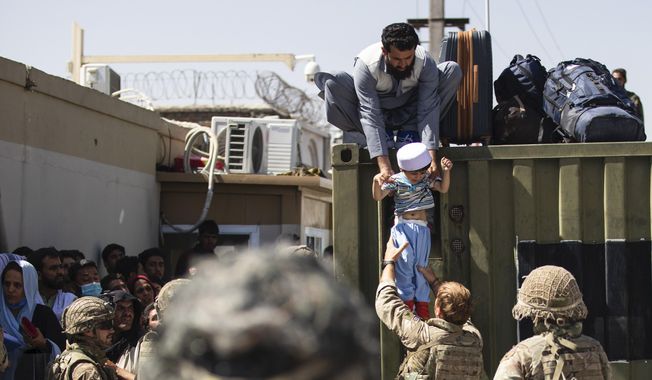
It dominated the headlines in the summer of 2021 and raised serious questions about the Biden administration's basic competence. President Biden's approval rating took a sharp hit and it looked to be a potential political liability for Democrats.
It was one of the United Nations' sharpest, most sweeping rebukes in recent history. Led by the U.S. and its allies, 143 countries on Oct. 12 voted to condemn Russia's invasion of Ukraine and demand that Russian President Vladimir Putin withdraw all of his troops from Ukrainian territory.
Iran has rapidly and unexpectedly emerged as Russia's most reliable wartime partner, providing drones and missiles for its brutal attacks on Ukrainian civilians, on-the-ground technical support for its flight operators and even turbines to help Russia's gas industry skirt Western economic sanctions.
The U.S. and its European allies mounted a preemptive, full-court press Monday to debunk Russian claims about a looming "dirty bomb" attack by Ukrainian troops on Ukrainian soil, painting those claims as the potential first step in a major Kremlin "false flag" operation that could justify a Russian response and ultimately escalate to a nuclear war.