Ben Wolfgang is a national security correspondent at The Washington Times, a senior member of its Threat Status team, and the host and producer of the award-winning Threat Status Podcast. Ben covers national security, foreign policy, military affairs, the defense industry and the rapidly evolving landscape of military technology. A Pennsylvania native, he joined The Washington Times in 2011 after serving as a political reporter at The Republican-Herald in Pottsville, Pa. Over the course of his career, Ben has covered the White House, Congress, and four presidential campaigns. His reporting has earned recognition from some of journalism's most respected organizations, including the Virginia Press Association and the Society of Professional Journalists' Washington, D.C. Chapter, among other honors. Ben has interviewed heads of state, chairmen of the Joint Chiefs of Staff, senior military commanders, cabinet secretaries, senior government officials, and the CEOs of many of the nation's largest and most influential defense companies. Ben is a frequent guest on broadcast media, with appearances on C-SPAN, the Sirius XM POTUS channel, and other outlets. He can be reached at bwolfgang@washingtontimes.com.
The U.S. Embassy in Kabul changed course and issued a travel warning Saturday after an apparent threat from Islamic State terrorists, telling Americans not to go to the Afghanistan capital's airport unless advised by an official government representative.
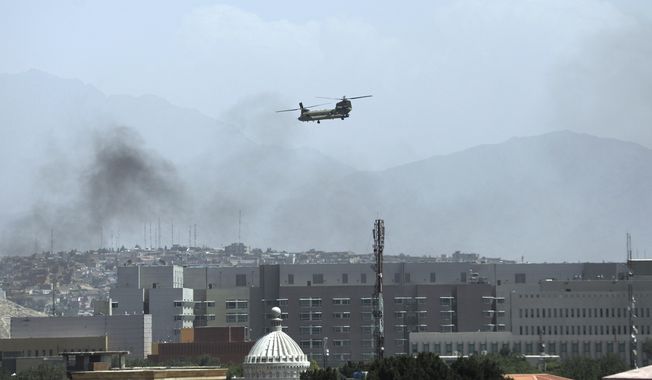
American diplomats burned documents and the U.S. military rushed to evacuate personnel from Kabul on Sunday morning as Taliban fighters entered the Afghan capital and pushed for the unconditional surrender of the Afghan government, capping a stunning insurgent offensive coinciding with the American military withdrawal after two decades of war.
The Pentagon is sending thousands of fresh troops to Afghanistan to help evacuate diplomats from the suddenly vulnerable U.S. Embassy in Kabul, Biden administration officials said Thursday, as Taliban fighters captured two of the country's three largest cities and moved to within about 80 miles of the capital.
Former President Trump on Thursday slammed his successor's handling of the U.S. military withdrawal from Afghanistan and suggested that had he been commander in chief, the insurgent Taliban would be behaving much differently.
The Taliban captured their seventh and eighth provincial capitals Tuesday as top U.S. lawmakers blasted the Afghan army's "complete, utter failure" on the battlefield, underscoring mounting frustration in Washington over the growing possibility of a full takeover by the radical Islamist insurgency.
The rapid disintegration of Afghanistan has sparked a blame game across Washington and throughout the world as a series of stunning Taliban victories have left the U.S.-backed government in Kabul reeling and the Biden administration scrambling to stop the bleeding.
The Taliban took control Monday of a sixth provincial capital in Afghanistan, according to regional media, capping off a whirlwind weekend offensive that has left the U.S.-backed government in Kabul reeling.
The Taliban on Friday reportedly seized control of its first provincial capital, achieving a key symbolic victory by overrunning Afghan government forces and taking control of Zaranj, capital of the southern province of Nimroz.
Advocates for regime change in Cuba delivered to President Biden on Thursday a petition with over 71,000 signatures urging the White House to take more aggressive steps to help topple the island's longstanding Communist government.
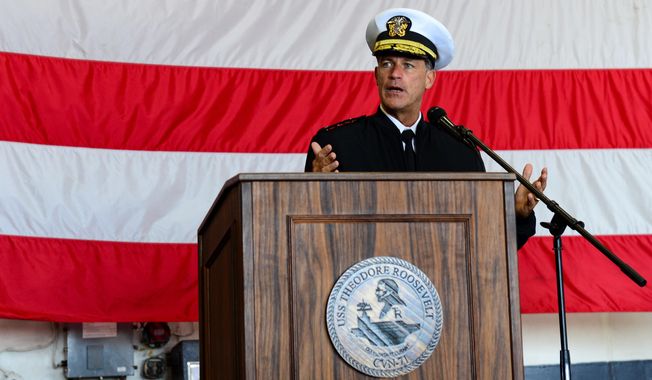
Beijing's aggressive moves in the South China Sea and elsewhere have sparked a "sense of urgency" inside the Pentagon, the U.S. military's top Pacific commander said Wednesday, pledging that America and its allies will work together to push back on China's quest for global dominance.
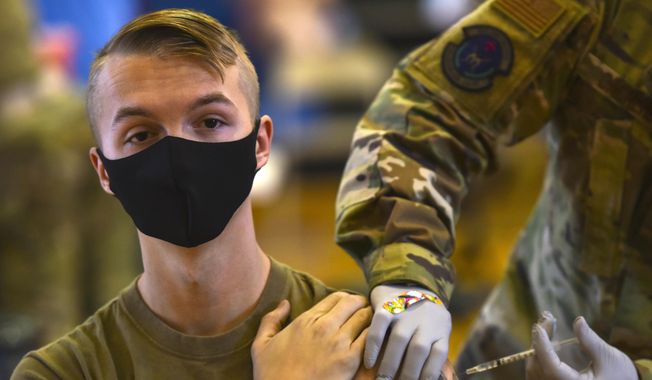
A progressive political action committee on Wednesday launched a petition to ban Fox News from airing on all U.S. military installations, blaming the channel and some of its high-profile hosts for stubbornly low COVID-19 vaccination rates among troops.
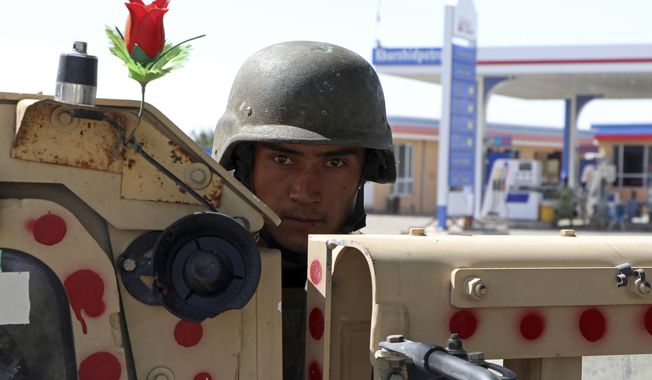
The Taliban's success in capturing territory and beating back government troops has emboldened the insurgents as they launch an aggressive urban offensive, the Biden administration's special envoy for Afghanistan warned Tuesday, adding that the Afghan security force needs to quickly "find its military bearings" or risk further losses.
The Pentagon's looming COVID-19 vaccine mandate for all troops threatens to push the military into the middle of yet another divisive cultural battle, this time over personal health choices vs. the collective responsibility to prevent deadly outbreaks in the ranks.
The Afghan air force on Monday pounded the Taliban with repeated airstrikes in an effort to keep insurgent fighters from capturing key cities in southern and western Afghanistan, officials said, as the battle for the country's future moves from the rural countryside toward major population centers.
The Pentagon hopes to move "expeditiously" toward mandatory COVID-19 vaccinations for all U.S. service members, Defense Secretary Lloyd Austin said Friday, pledging to consult with military doctors and to quickly develop a path forward.
It's become far too easy for repressive regimes around the world to abuse Interpol and use international law enforcement to target dissidents and political opponents, a bipartisan group of lawmakers said Friday as they rolled out legislation to limit how governments can enlist the group.
Russian commandos on Friday kicked off a series of military drills along the Uzbekistan-Afghanistan border, fueling questions about a regional power vacuum left by the unfolding U.S. and allied military withdrawal from Afghanistan that Russia and other players will seek to fill.
The U.S. will end its combat mission in Iraq by the end of the year, President Biden announced Monday, with American forces shifting to an advisory and training role but potentially opening the door, critics say, for Iran to gain even more influence in the region.
The future of the U.S. war in Iraq will come into focus Monday when President Biden meets with Iraqi Prime Minister Mustafa al-Kadhimi at the White House, with the two leaders expected to finalize a withdrawal plan that could fundamentally reshape America's military role in the Middle East.